Playfulness in a Heavy World
Meditating with art offers a gentle alternative to the constant pull of 24/7 news and the heaviness it carries. Instead of being swept up in urgency or fear, we’re invited to slow down and rest our attention on something quiet and present. Simply looking—without needing to interpret or react—allows the nervous system to settle. In a world that can feel overwhelming, art becomes a place of refuge, reminding us that attention itself can be an act of balance, clarity, and quiet hope.
Lately, I’ve been spending time with the painting The Ball (1899) by Félix Vallotton, now held in the Musée d'Orsay. If you have a moment, you might pause here and look it up for yourself before reading on. A small child in a bright white dress moves across a sunlit lawn, following a vivid red ball, while two adults remain at the edges—present, but removed. There’s a quiet tension in the scene, as if the child stands between two realms: one of light, play, and immediacy, and another more distant, shadowed, and difficult to articulate.
I find myself wondering about the red ball. What is it, really? Perhaps it’s whatever keeps us alive to ourselves—what draws us into presence, curiosity, and play.
Somewhere along the way, many of us lose touch with that. We trade play for productivity, curiosity for concern, creativity for obligation. We begin to measure our lives by output rather than aliveness. And yet, the memory remains—those long afternoons of childhood when time opened, imagination took over, and joy required no justification.
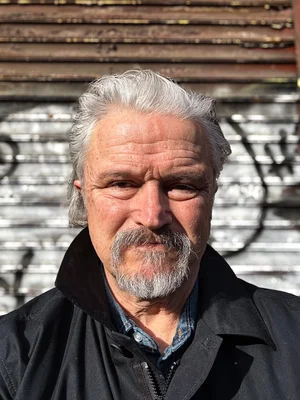
The original image I chose for this blog is a photograph I made at our local library, just before an exercise class began. It, too, carries the same invitation. My red ball is photography. My partner Heidi’s red ball is writing. Your red ball might be taking a painting class, gardening, or cooking. For Félix Vallotton, it was oil paint and canvas.
Find your red ball and return to it often. It may be one of the surest ways to navigate whatever difficult days lie ahead.