
What Art Knows About Us
Over time, we become more whole when we learn to ask of the art that stays with us: what is this showing me about what is missing? Art is not only something we admire—it is something that calls us, quietly, in a particular direction—toward balance, toward spaciousness, toward a life that feels more like our own.
Photographer Hiroshi Sugimoto works with a kind of radical restraint—horizon lines, long exposures, and time held in quiet suspension. His photographs feel less constructed than patiently received, as though they have emerged from sustained attention rather than deliberate design. He is not simply simplifying the image; he is letting it fall away to what cannot be reduced any further: time, light, horizon, presence.
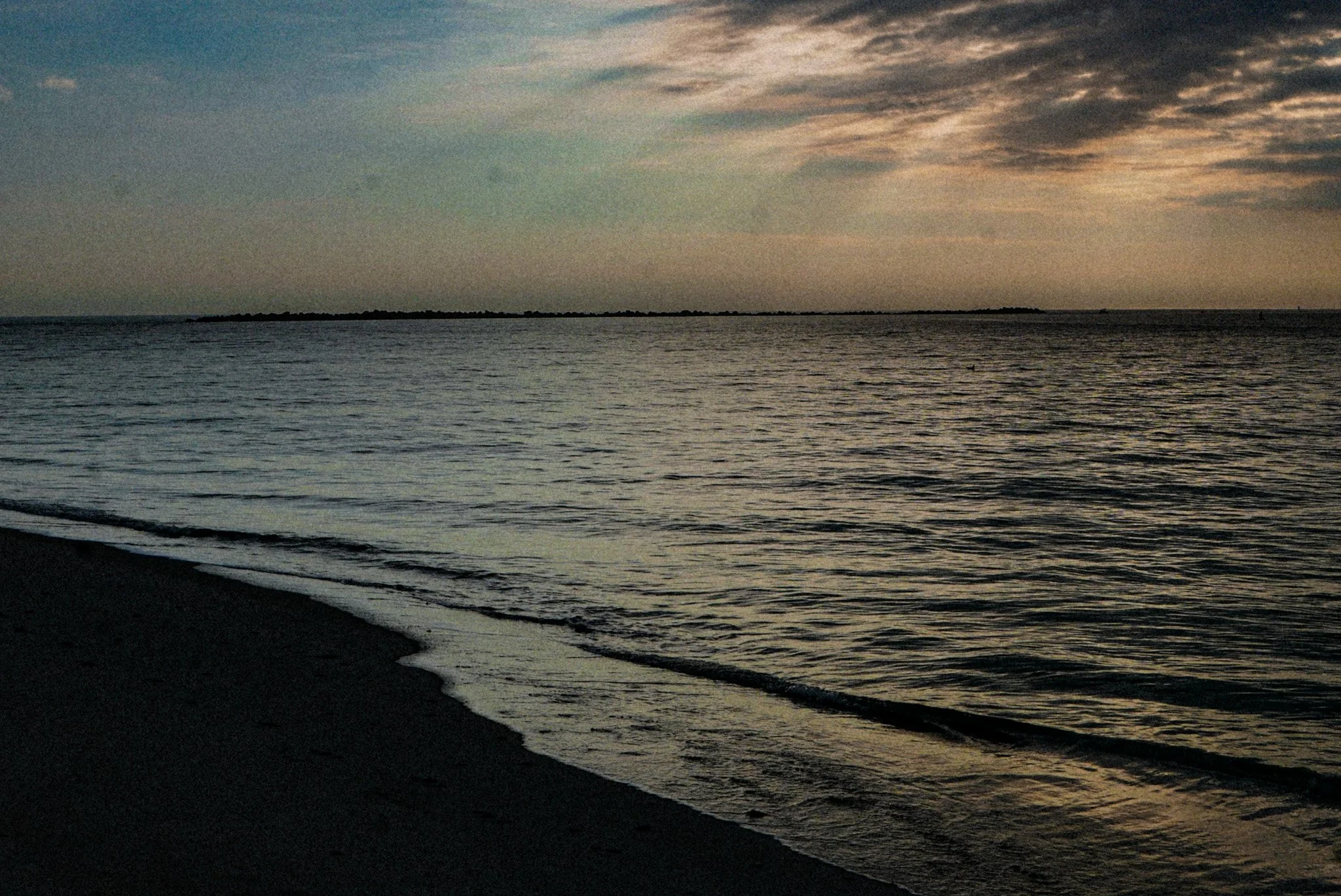
In his Seascapes, the image is nearly empty—a single line holding sea and sky in balance. And yet, what begins to unsettle and astonish is this: these photographs are made in different parts of the world, and still they appear almost the same. Sugimoto once said he wanted to capture a view that would have been recognizable to someone living thousands of years ago. Standing before them, we are no longer anchored in a particular place, but drawn into something continuous—something older than language, older than memory, quietly enduring.
And yet, we do not all meet these images in the same way. Some feel drawn in by the stillness, the openness, the way the image seems to create space within them. Others turn away, finding them too empty, too quiet, too close to silence. Where is the color? Where is the movement? Why does everything feel so spare?
Perhaps what we are sensing is not only in the image, but in ourselves. We are often drawn to what we are missing—psychologically, even spiritually—and we resist what feels too familiar or too close to what already overwhelms us. The art we love is not a mirror of who we are; it is a quiet gesture toward who we are becoming, or who, somewhere beneath the noise, we long to be.
To be moved by Sugimoto’s Seascapes may be to recognize that there is simply too much—too much noise, too much urgency, too much to take in, and nowhere to set it down. These images do not argue or persuade. They open: a wider horizon, a slower breath, a life with a little more space in it. They seem to whisper that we can step back, that we can close the door, even briefly, on the constant hum of things, and begin again with less.
Over time, we become more whole when we learn to ask of the art that stays with us: what is this showing me about what is missing? Art is not only something we admire—it is something that calls us, quietly, in a particular direction—toward balance, toward spaciousness, toward a life that feels more like our own.
The image I’ve chosen is of Masonboro Inlet in New Hanover County, North Carolina, where the water opens gently between Wrightsville Beach and the long, unbroken stretch of Masonboro Island Reserve. It is a place where nothing insists, where the horizon does its quiet work.
And if it is true that we are drawn to what we need, I find myself wondering what this image is asking of me. And perhaps the same question can be gently extended to you: what does this image stir, or resist, within you? Does it draw you in—or leave you at a distance? Does it offer a sense of ease, or does its stillness feel unsettling? What, exactly, does it seem to know about what you might be needing now?
What we are drawn to, and what we resist, may be the very place our life is asking to grow.
A Wabi-Sabi Kind of Life
It seems no one is spared the turning of the wheel—the gentle and the difficult, the light and the shadow, all of it shaping us in ways we don’t always understand at the time.
I’ve lived long enough now to feel the full range of things this brief life holds—success and failure, marriage and divorce, the fullness of raising children and the quiet of an empty nest, moments of clarity and moments I’d rather forget.
It seems no one is spared the turning of the wheel—the gentle and the difficult, the light and the shadow, all of it shaping us in ways we don’t always understand at the time.
And so, something in me has softened. I find I can listen more fully now—without rushing to respond. I can make art more freely—without leaning so heavily on the opinions of others. And I can live, more and more, with a quiet acceptance of things as they are—a wabi-sabi kind of life, held together not by perfection, but by presence, and offered without apology.
We Have a Choice
To grow into elderhood is to recover a way of seeing
we once knew well.
Like a child before language,
we learn again to notice—
to point, almost instinctively,
toward the subtle beauty that lives in the everyday:
light finding its way across a wall,
a voice that feels like home,
the simple fact of being here.
As we grow older, something quiet and decisive begins to happen.
Life either opens us to its mysteries—or gently closes around us.
I don’t mean mysteries in the abstract,
but those simple, enduring truths that live beneath belief systems—
beneath politics, doctrines, and creeds—
the kind that can’t be argued, only recognized.
Even in the midst of the daily noise,
the chaos that presses in from every side,
if we can remain open—spacious, receptive—
something in us begins to settle.
Trust grows.
A quiet contentment takes root.
And we begin to sense a more ancient knowing,
a kind of primordial wisdom
that has always been there, just beneath the surface of things,
waiting for our attention.
But it can go another way.
If our gaze narrows—
if we spend our days tracking our 401(k)s,
studying the lines on our faces in the morning mirror,
counting the deepening creases around our eyes,
and the slow, quiet silvering of our hair—
we risk becoming confined by our own anxieties,
caught in the small, tightening loops of “what if.”
Then the world begins to shrink.
We see only diminishment,
only the slow unraveling
of what we once called a productive life.
And yet—there is another calling.
To grow into elderhood is to recover a way of seeing
we once knew well.
Like a child before language,
we learn again to notice—
to point, almost instinctively,
toward the subtle beauty that lives in the everyday:
light finding its way across a wall,
a voice that feels like home,
the simple fact of being here.
To meet it all
with something like awe—
and yes, with a sense of childlike curiosity.
As wise elders, we can use our voices—
and step-in no-hand shoes—
to help secure a safe and equitable future
for the next generation of emerging adults.
And from that place,
we step forward—not away—
to engage a hurting world.
With our voices.
With our presence.
With our well-worn shoes carrying us where we’re needed—
toward a more just and gentle world
for those who are coming after us.
This is the work of wise elders:
to see clearly,
to love deeply,
and to remain available
to what matters most.
We do have a choice.
We can live these remaining days in alignment
with that deeper wisdom—
becoming steady companions,
reliable mentors,
a quiet source of grounding for children and grandchildren.
Or we can turn inward in another way—
fortifying, insulating, protecting—
redecorating, again and again,
the small rooms of our own fear.
We have a choice.
And life, even now,
is still inviting us
to choose well.
What Suffices
As I grow older,
I ask less of life—
and receive more than I imagined.
And so I turn again
to the ordinary moment—
to be totally here
and nowhere else.
to notice
and feel everything—
everything.
As I grow older, I am learning—quietly—
to tell the difference
between what holds real power
and what is merely performative.
I hear the striving of the privileged few,
their hunger for more—
while just beyond the frame
someone quietly weighs
bread or medicine.
And something in me grows quieter.
As I grow older, my grip loosens.
Ambition, once loud,
has softened.
Desire still visits—
but it no longer runs the house.
And so I am less persuaded
by the whisper
that I am not enough.
As I grow older, I begin to see
I was never the voice in my head.
What I need now feels simpler.
a friend’s presence.
a loving partner.
the quiet pride of being a father.
unhurried mornings.
A poem by Robert Lax.
A photograph by Minor White.
These are enough.
A friend’s voice.
A lingering lunch
where conversation turns toward what is tender.
A glass of red wine on the porch.
A journal page filled with gratitude.
As I grow older,
I ask less of life—
and receive more than I imagined.
And so I turn again
to the ordinary moment—
to be totally here
and nowhere else.
to notice
and feel everything—
everything.
What We Carry Is Not Ours Alone
But this isn’t grief. Not quite. Nor is it heartache. It feels more like a soft, persistent knowing— that happiness, while real, is often brief, and that much of life is lived in the company of things unfinished, imperfect, and quietly heavy.
Over the past few months, I’ve been accompanied by a quiet melancholy.
It arrived without announcement. I can’t quite trace its origins. Perhaps too much news. That steady, low-grade ache of the world. Or perhaps the recent diagnosis of osteoarthritis in my back—a reminder, not unkind but unmistakable, that time is doing what time does.
But this isn’t grief. Not quite. Nor is it heartache.
It feels more like a soft, persistent knowing— that happiness, while real, is often brief, and that much of life is lived in the company of things unfinished, imperfect, and quietly heavy.
And yet, because of this— what is gentle begins to glow. What is calm, what is kind, what is graceful— these stand out now with a kind of unexpected clarity.
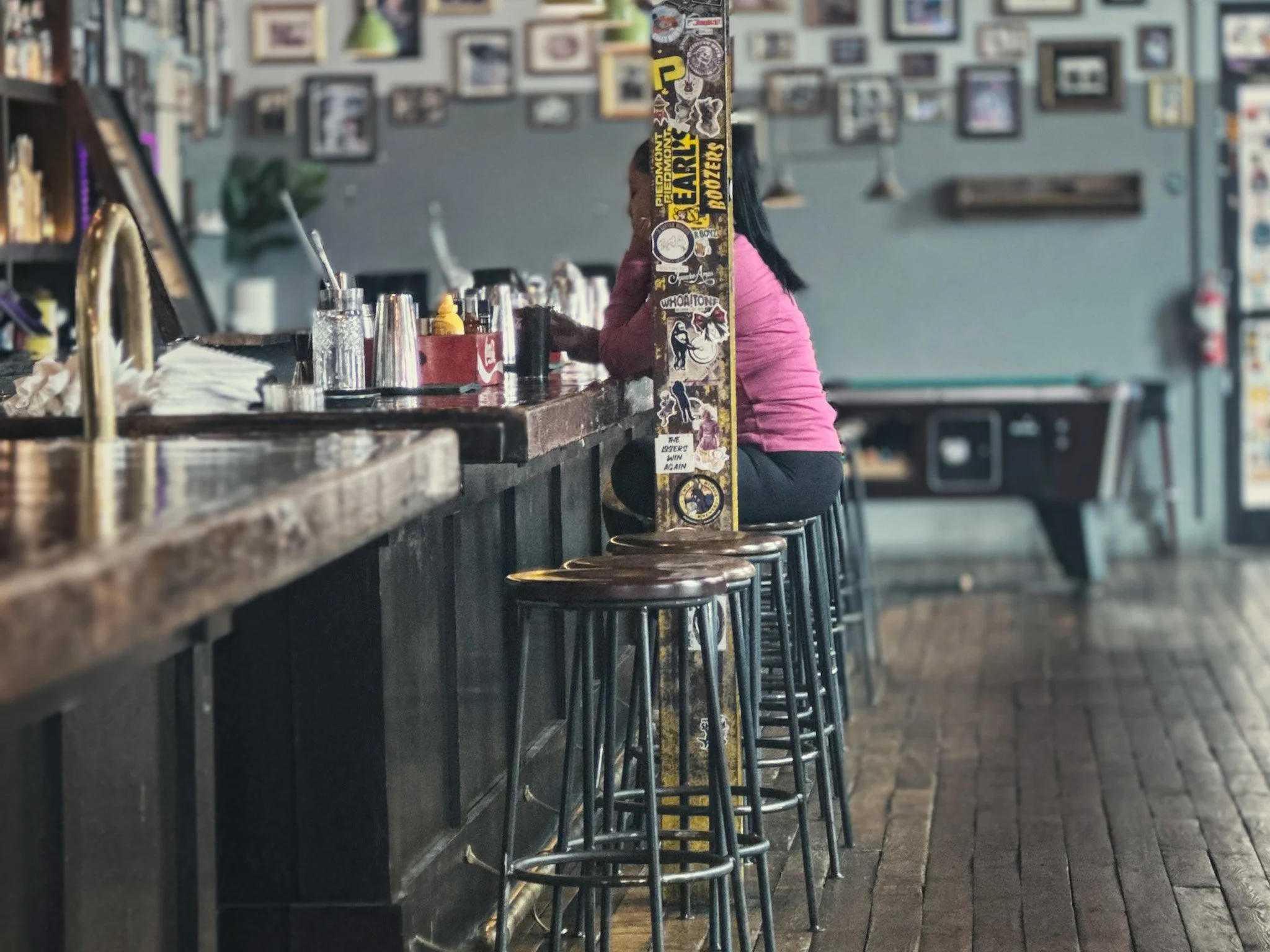
I caught a glimpse of this a few months ago while having lunch with my friend James. Across the room, a young woman sat alone at the bar. No conversation. No movement. Just her, in the stillness of that empty space. I know nothing about her life. Why she was there. What she carried. And yet—I knew the feeling.
You can find the full piece over on Substack: https://substack.com/@timauman1/note/c-249915137
The Essential and Unavoidable Place of Failure
What I need—and what we all need, perhaps—is a more generous way of seeing: an honest remembering of how much awkwardness, repetition, and imperfect seeing lies behind anything we come to call beautiful.
Before becoming one of the most distinctive photographic voices of the 20th century, Diane Arbus spent her days in the polished world of fashion photography, working alongside her husband. The images were composed, elegant—and yet something in them did not quite breathe. By her own telling, they left her quietly unsatisfied, as if she were circling the surface of a life she had not yet entered.
Then came Lisette Model. Model did not offer comfort in the usual sense. She did not say, “This is good.” She said, in effect: “Go closer. Risk more. Tell the truth.”
And in that invitation—part challenge, part blessing—Arbus began to trust what she had once held back: her strange, searching way of seeing. The work deepened. The images began to breathe.
Something similar unfolds in the early life of Carrie Mae Weems. She did not begin with the clarity we now recognize. Her early photographs were grounded in documentary practice—steady, attentive, but not yet carrying the layered voice that would later emerge. What changed was not simply her skill, but her permission.
In the presence of teachers, fellow artists, and a widening circle of conversation, she began to see that her own life—her family, her history, her identity—was not something to work around, but something to work from. That her experience was not incidental, but essential.
And so the work shifted. Not toward perfection, but toward truth. Again and again, this quiet pattern appears: The mentor listens for what is alive in the work, and quietly invites, “Stay with it.” And yet, how quickly we forget.
I often imagine that artists arrive fully formed—that greatness is bestowed rather than slowly, almost invisibly, grown. In that forgetting, my own early photographs begin to feel like evidence against me, rather than part of the path.
After all, I know my own work from the inside: the hesitation, the misjudgment, the images that fall flat. And yet I encounter the work of others only after it has been shaped and offered to the world. I do not see their early attempts—the uncertain frames, the failed exposures, the long stretches of not knowing. And so the scale tips—unfairly, quietly, persistently.
What I need—and what we all need, perhaps—is a more generous way of seeing: an honest remembering of how much awkwardness, repetition, and imperfect seeing lies behind anything we come to call beautiful.
I think back to my undergraduate years at Wofford College in Spartanburg, South Carolina, and to my art history professor, Dr. Constance Armitage. I took every course I could with her—not because she made things easier, but because she made them more real.
She helped us to see differently—to honor our own unique ways of perceiving the phenomenal world, rather than rushing to inherit someone else’s vision.
In her presence, looking became something more than analysis. It became a kind of listening. A quiet trust that what we were drawn to—however tentative, however unpolished—might already carry the seed of something real.
She didn’t take us to museums, but she encouraged us—again and again—to go, to return often, to linger and to look. And when we did, she quietly shaped our attention—not only toward the masterpieces that draw the crowds, but toward the early works of those same artists: the hesitant lines, the uneven compositions, the beginnings that did not yet know what they were becoming.
We explored the earliest works of a famous artist so that we could recognize the essential and unavoidable place of failure—to allow ourselves to do things quite imperfectly for a very long time, as the price we cannot avoid paying for the chance, one day—perhaps decades from now—to create something that feels whole: an image, a book, a non-profit, a garden, a meal…something others might one day call a masterpiece.
And perhaps this is not so far from what Shunryu Suzuki called beginner’s mind—that way of meeting the world without the burden of already knowing. A mind that is open, curious, unguarded, and willing to stay with uncertainty.
“In the beginner’s mind,” he reminds us, “there are many possibilities.” To begin again—awkwardly, imperfectly, honestly—is not to fall short of the path. It is the path.
In the Company of Broken Hearts
What we share in common is far more fundamental: our broken hearts—the Iranian mother grieving the death of her son, the parents of a U.S. Marine waving goodbye as their daughter is deployed to the Middle East, the husband who has just read the word “cancer” for the first time on MyChart.
The older I get, the harder it can be not to be quietly undone—sometimes to tears—when I come into contact with a moment of tenderness: a film, a phone conversation with my son Jon, waving goodbye to my son Micah as his car disappears in the distance, or a beloved photograph of my brother Ed.
I’ve come to sense that these moments carry such weight because, over time, we begin to see more clearly the deep contrast that shapes a human life. We come to know its customary hardness—its disappointments, its quiet cruelties—and so when tenderness appears, even briefly, it meets us in a deeper place. Perhaps we are not only responding to the beauty before us, but also grieving, in some quiet way, the innocence the world does not always know how to protect.
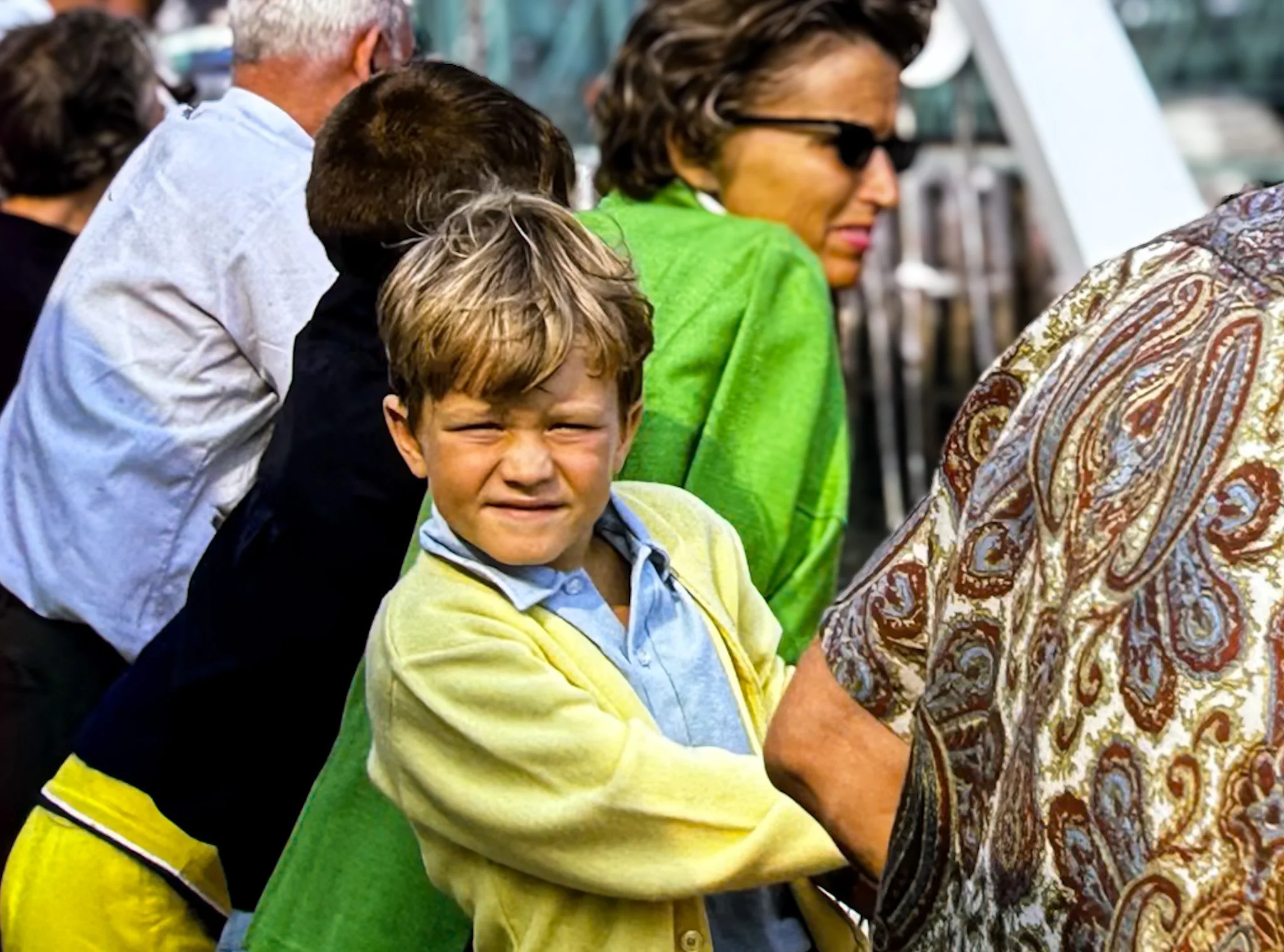
The photograph I’ve chosen for this reflection is of my younger brother Ed. I assume my dad took the picture, though I have no memory of when or where it was taken. What I do know is how difficult it is to look for very long into the eyes of my baby brother. There he is—Edwin, as we called him then—wide-eyed, delighted, meeting the world with a kind of unguarded joy.
And I know what came later. He did not.
There is something almost unbearable in that difference. As he giggled and marveled at the life laid out before him, none of us could see what would eventually unfold—years later, a diagnosis of Parkinson’s disease, and then pancreatic cancer. A life that would ask so much of him. A life that would end too soon, leaving behind his wife Robin and his daughter Presley.
To look at this photograph is to hold two truths at once: the purity of that moment, and the weight of everything that followed. And sometimes, that is almost more than the heart can hold.
And yet…That small, radiant child is not only my brother. He is, in some way, all of us.
We, too, began this way—open, curious, unguarded. And over time, we have walked through more than we ever would have chosen. We have made our share of mistakes, missteps, and the small stumblings of an ordinary life. The world, sooner or later, finds its way into every heart—and breaks it.
And still, something tender remains.
Perhaps these moments are not asking us to explain anything, or to make sense of it all, but simply to soften. To meet ourselves—and one another—with a little more kindness. At the end of the day, these small acts of tenderness matter more than our politics, our religious affiliations, or how much money we have in the bank.
What we share in common is far more fundamental: our broken hearts—the Iranian mother grieving the death of her son, the parents of a U.S. Marine waving goodbye as their daughter is deployed to the Middle East, the husband who has just read the word “cancer” for the first time on MyChart.
And to remember, gently, that whatever we have carried, whatever we have endured, we are deserving of as much tenderness and compassion as this life can offer.
What Picasso Knew About War
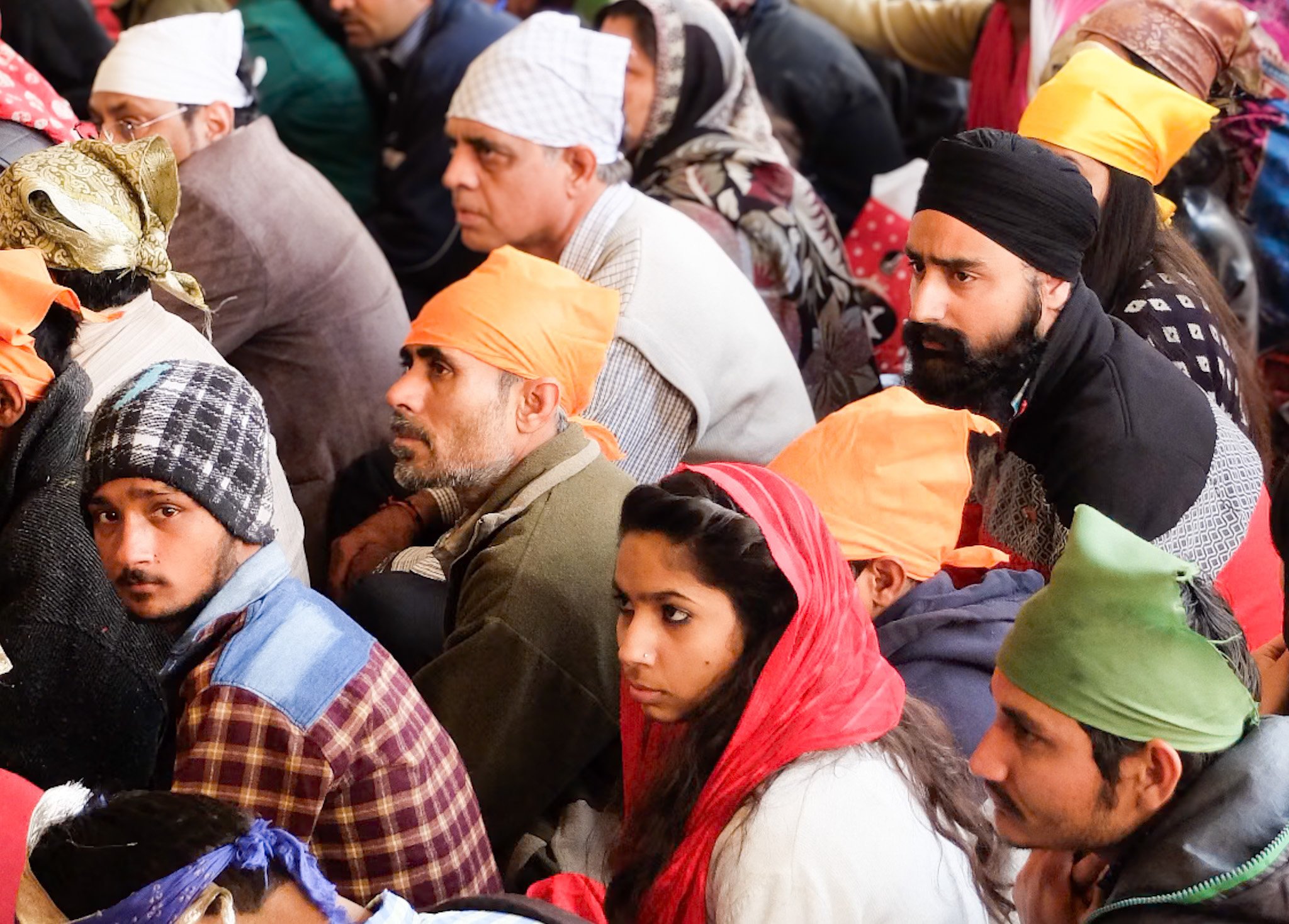
The image I chose for this post comes from Gurudwara Bangla Sahib in New Delhi, home to its remarkable langar, a free community kitchen that serves thousands each day. People of every background sit side by side on the floor, sharing a simple meal—lentils, rice, bread—prepared by volunteers in a spirit of devotion. No one is turned away. It is not charity so much as practice: seva, compassion made visible.
It took only a few hours for General Francisco Franco’s forces, aided by the German Condor Legion, to devastate the Basque town of Guernica—a sudden unraveling of ordinary life. The bombing came in waves: planes circling, returning, circling again, until the town was reduced to smoke, rubble, and stunned silence. And for those who lived through it, the ending never really came. It lingered—in memory, in grief, in the slow, uneven work of making sense of what had been lost.
When Pablo Picasso began painting Guernica, he stepped into that lingering space. Thirty-five days of intense labor, yes—but also a lifetime of seeing and feeling. The painting doesn’t explain the event. There are no clear soldiers, no literal planes. Instead, there are fractured bodies, anguished faces, a horse mid-cry, a mother holding her dead child—images that feel less like history and more like the inner shape of trauma.
War happens quickly—brutally, without warning. But understanding it, absorbing it, responding with any depth—that takes years, even generations.
Art, at its best, slows us down. It holds the unbearable in place long enough for us to really see it. Picasso’s thirty-five days were not an answer; they were an invitation: stay a little longer… look again… don’t turn away.
And so we’re left with a quiet paradox: the speed of destruction, and the slowness of understanding. We see it still—in Gaza, in Ukraine, in Iran, in Lebanon. Decisions are made in hours; consequences unfold across lifetimes. A deeper wisdom asks something different of us: attention, patience, and the courage to keep seeing.
If you can, take a few minutes—maybe even thirty-five—and sit with Guernica. Let it speak. Notice what rises.
The image I chose for this post comes from Gurudwara Bangla Sahib in New Delhi, home to its remarkable langar, a free community kitchen that serves thousands each day. People of every background sit side by side on the floor, sharing a simple meal—lentils, rice, bread—prepared by volunteers in a spirit of devotion. No one is turned away. It is not charity so much as practice: seva, compassion made visible.
Between the anguish of Guernica and the quiet generosity of the langar, we are reminded—gently but firmly—that another way is always possible.
And perhaps this is what that deeper wisdom is asking of us now. Not to look away when the images are difficult, not to rush too quickly toward conclusions or sides, not to harden ourselves in the face of what we cannot easily fix. But to practice a different kind of seeing—one that lingers—to stay with the human cost, even when it unsettles us, and to allow our hearts to remain porous, responsive, alive. Attention, in this sense, becomes a form of care. Patience, a refusal to reduce complex suffering into simple narratives. And the courage to keep seeing—again and again—may be one of the most honest forms of compassion we have.
Heidi and I are trying, in our own imperfect way, to pass this on to Jon, Micah, Addie, and Noah: that a deeper wisdom asks something different of us—attention, patience, and the courage to keep seeing. And perhaps this is part of what each of us is called to offer now. In what we notice, in how we speak, in what we refuse to ignore, we are shaping the world the next generation will inherit. And as always, it will be our children and grandchildren who live most fully with the consequences of which path we choose.
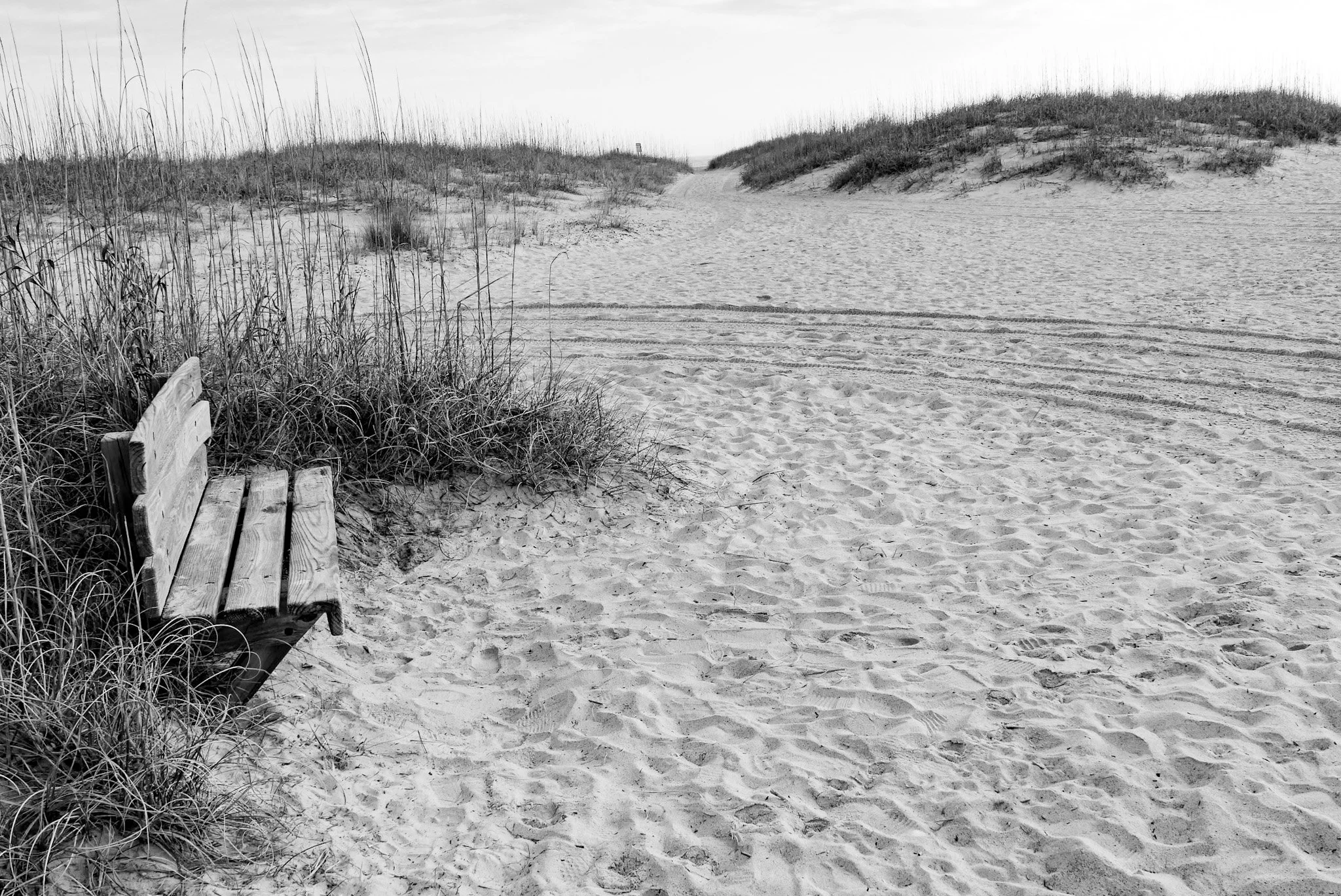
The Bench We Somehow Know
We are given endless encouragement to live loudly. There is always somewhere new to go, something more to become, someone else we’re supposed to be chasing after or becoming worthy of. But at sixty-eight, I find myself no longer compelled by all that urgency. Not in resistance, exactly—but in recognition. That perhaps our deeper calling is not to keep moving, but to stay. To stay long enough for our eyes to soften… and to finally see the beauty of what has been here all along, waiting for our full attention.
Back in December, I found myself quietly creating a kind of personal memorial—not to loss, but to the contemplative life itself. The image I received stands in gentle contrast to the noise and spectacle we so often ingest—less like something that animates us, and more like something that settles us. And yet, like those roaring crowds in a stadium, it carries its own quiet intensity. It gathers and concentrates a feeling. It invites us to pause long enough to recognize what we’ve always valued, but too easily overlooked. It steadies us. It returns us, quietly and without force, to our own center.
On the southern end of Wrightsville Beach in North Carolina, looking out toward Masonboro Inlet, I received a photograph of an empty bench facing the wide openness of sea and sky. I wasn’t trying to take or capture anything, but to receive what was already offering itself—standing still long enough for the universe to speak first. I returned to that bench again and again—different light, different angles—drawn not by novelty, but by a quiet insistence. It was the bench that held me there. The bench that kept asking for my attention. Over time, it began to feel less like an object and more like a small shrine to stillness, to integrity, to tenderness.
We are given endless encouragement to live loudly. There is always somewhere new to go, something more to become, someone else we’re supposed to be chasing after or becoming worthy of. But at sixty-eight, I find myself no longer compelled by all that urgency. Not in resistance, exactly—but in recognition. That perhaps our deeper calling is not to keep moving, but to stay. To stay long enough for our eyes to soften… and to finally see the beauty of what has been here all along, waiting for our full attention.
This isn’t a rejection of ambition or growth. Nor is it a dismissal of that inner tug that calls us forward. But so much of our lives are lived leaning into the future, that we rarely allow ourselves to fully inhabit the present. And the present—quiet, ordinary, easily missed—is where so much of the richness actually lives.
Some days, the highlight is as simple as grabbing a couple of my cameras and wandering through the streets of my own hometown, receiving whatever moments of urban life choose to reveal themselves. Or a walk down to Camino Bakery for a cinnamon bun, a loaf of bread, or a good Caffè Americano. Then back home. Lying on the bed with Heidi, listening to a favorite podcast. Letting the mind wander a bit. Letting certain thoughts rise and settle. There are still things within us that need tending—some that simply ask to be felt, others that invite a deeper looking. It may sound like idleness from the outside. But in truth, it is a kind of quiet discipline—a way of returning ourselves to sanity, to balance, to contentment.
And yet, after all of this—the wandering, the small pleasures, the quiet disciplines—it is the bench that remains. The bench we have not sat on, and yet somehow know. The bench that waits without asking anything of us.
It begins to feel less like an object and more like a place within us—our true home—the place we have slowly drifted from through unbridled ambition and quiet forms of workaholism. And perhaps we will reach what we have been searching for, and finally understand where we have been all along, not by going farther, but by returning—again and again—to that place.
To sit, without distraction or self-reproach. To feel the breeze move across your face, asking nothing of you. To hear the soft rhythm of waves meeting the shore—arriving, receding, arriving again—without urgency, without demand. To notice the way light shifts across the water. The way the body begins to soften when there is nothing it has to prove.
To let the mind settle where it is, without chasing or correcting. To allow what is unfinished in you to simply be, for now. To rest your attention on what is given, rather than what is missing.
To sit long enough that the need to go somewhere else begins to loosen its grip. Long enough to remember that this—this moment, this breath, this simple awareness—is not a detour from your life, but the very ground of it.
And to recognize, gently, without fanfare, that you are already home.
A Porch, a Book, and a Hostile Aviary
For most of my professional life—as a chaplain, mindfulness educator, and contemplative photographer—I’ve taught about the importance of cultivating gratitude. I’ve spoken often about building what I like to call a “gratitude neural pathway”—the idea that, over time, a steady practice of noticing what is good and given can soften the sharp edges of anxiety. People are usually quite receptive to this. Which leads me to wonder… What the hell is going on with these damn birds?
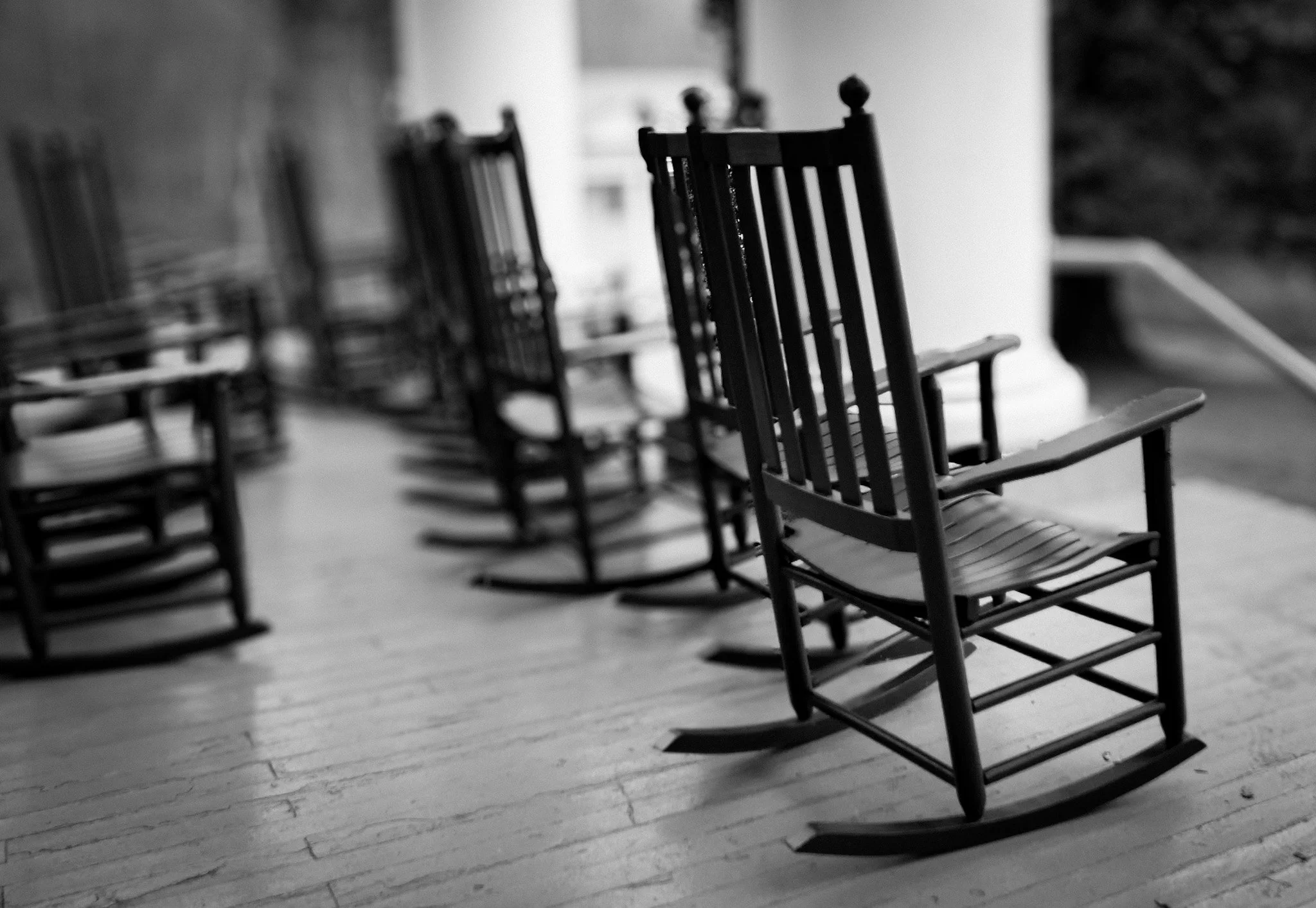
One of my favorite retirement rituals is to sit on my front porch late in the afternoon and read. Sometimes—with full honesty—a nice glass of shiraz joins me. At that hour, when the light begins to soften and the day exhales, even a few pages can soothe my busy, overstimulated mind. I keep a dedicated stack of “front porch books”—the kind that invite dipping in and out rather than plowing through. My current companions include Black Mountain Days by Michael Rumaker, Memorable Fancies by Minor White, Aperture Magazine Anthology – The Minor White Years, Leica Fotographie International (October 2026), Robert Lax Poems (1962–1997), and A Book of Days by Patti Smith. I move between them slowly, sometimes pausing for a phone call with a friend or family member, sometimes just letting the words settle.
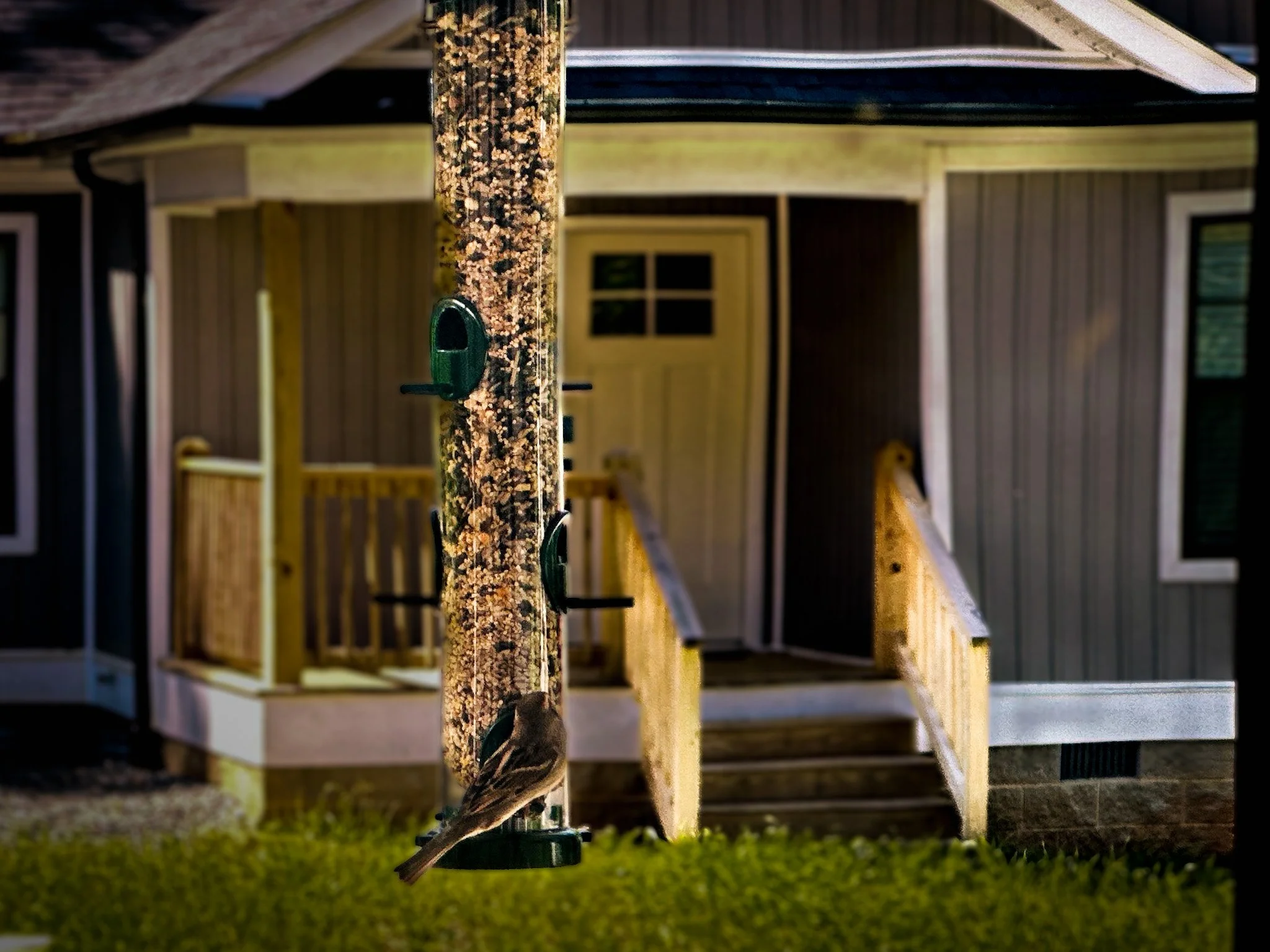
Recently, I decided to enhance the experience by adding a bird feeder at the far end of the porch. The idea was simple: create a little distance between myself and the feeder so the birds could feel at ease… and I could enjoy their presence without intruding. In theory, it was a beautiful plan. In practice… not so much. I’ve learned that I live in a remarkably rich birding zone here in the foothills of the Appalachians. Cardinals, chickadees, titmice, goldfinches—they all show up, each with their own rhythm and personality. It’s a lively, ever-changing community. And apparently… I am not welcome.
Every time I settle into my rocking chair with a book and a glass of wine, the birds stage what can only be described as a collective protest. Chickadees scold. Titmice object loudly. There is, I’m quite certain, a level of outrage that borders on the theatrical. I’ve tried everything—sitting very still, moving slowly, projecting what I hoped was a non-threatening, contemplative presence. They are not impressed. Eventually, after enough chirping commentary, I gather my books (and what remains of my dignity) and retreat back inside.
Recently, I shared this predicament with a close friend, who suggested—quite rightly—that I write about it. Surely, we surmised, others must be facing similar existential crises. And here’s where things get especially interesting. For most of my professional life—as a chaplain, mindfulness educator, and contemplative photographer—I’ve taught about the importance of cultivating gratitude. I’ve spoken often about building what I like to call a “gratitude neural pathway”—the idea that, over time, a steady practice of noticing what is good and given can soften the sharp edges of anxiety. People are usually quite receptive to this. Which leads me to wonder… What the hell is going on with these damn birds?
Because, at the moment, their attitudes are not especially aligned with a mindful, gratitude-based worldview. I mean—have they not encountered the wisdom of Lao Tzu in the Tao Te Ching? Have they not at least skimmed Stephen Mitchell’s rather generous translation of Chapter 44?
“Be content with what you have;
rejoice in the way things are.
When you realize there is nothing lacking,
the whole world belongs to you.”
Mitchell’s translation of Chapter 44 is worth sitting with precisely because it speaks the language of our moment—a world that rarely pauses long enough to ask, What is enough? Where more literal translations of the Tao Te Ching warn about the dangers of excess, Mitchell turns that warning into something more invitational, almost like a quiet hand on the shoulder: Be content with what you have… When you realize there is nothing lacking… In a culture shaped by constant striving—more success, more productivity, more accumulation—his version gently shifts the focus from restraint to sufficiency. Not you should want less, but rather: you may already have enough. It names the quiet illusion that drives so much of our restlessness—that something is missing—and invites us to see that, perhaps, it isn’t. And when that illusion loosens, even slightly, something else begins to emerge. A sense of belonging. A recognition that this moment, just as it is, might be complete.
In my own contemplative photography work, this insight shows up again and again: when we stop trying to get the perfect image, when we release the pressure to produce, when we simply receive what is given, there is often a quiet realization that nothing is lacking. And from there, gratitude isn’t something we manufacture. It’s what remains when striving settles down.
Now, I can’t speak for the birds at your feeder. But I’m fairly certain that mine have not spent much time with Lao Tzu… or Ryōkan… or Robert Lax. They seem, at least for now, far more attached to their songbird mix than to Eastern philosophy. And maybe that’s the lesson I’m still learning. Because while I sit there with my books and my carefully cultivated thoughts about gratitude and enoughness… they’re simply waiting for me to leave. So they can get back to what matters—without overthinking it. And perhaps, in their own way, they already know what enough looks like.
Swords & Plowshares
Each conflict carries its own name, its own justifications. But beneath the surface, there is often a familiar human story unfolding: the pull toward certainty, the seduction of righteousness, the ease with which fear hardens into cruelty, and crowds become convinced of their virtue. These dynamics are not confined to distant battlefields. They can surface anywhere—in the rhetoric of nations, in the unrest of cities, even in the quieter, more insidious spaces of online exchange.
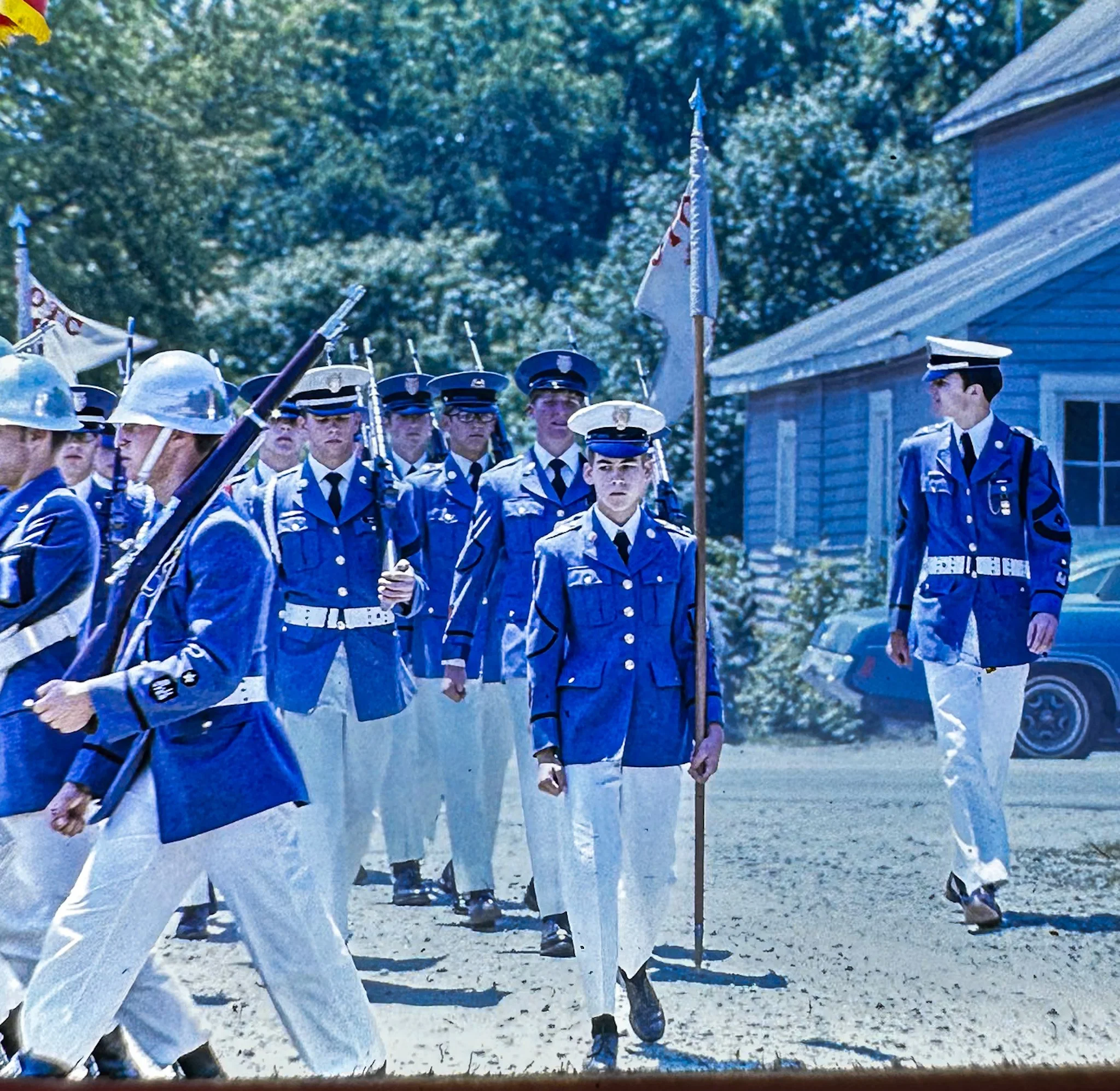
He is shouting commands to his adolescent peers. He wants his company to be the sharpest in the battalion. The young men shout their loyalty to the first sergeant, their voices rising together, a kind of chorus. He is eighteen years old.
I was just a boy—sixth grade—when my parents sent me away to a military preparatory school, at a time when the Vietnam War was still unfolding. Though I did not yet understand it, the war was already finding its way into us—into our posture, our language, our sense of what it meant to be a young man. To this day, I’m not entirely sure what moved my parents to make that decision. It felt like a sudden and disorienting turn for a boy shaped by the gentler rhythms of church life, the Boy Scouts, and public school classrooms. Perhaps they believed that one more layer of discipline—structured, unyielding—might steady me for whatever future lay ahead.
Looking back, it’s hard not to see how much of that world was already being shaped by the war itself. It hovered in the background of our lives, forming a generation of young men long before any of us were old enough to understand it. We absorbed it in ways both obvious and subtle—in the language of command, in the quiet pressure to be tough, in the unspoken expectation that we might one day be called to step into something we could not yet name.
The war drew to its official close on April 30, 1975, just a year before I graduated from high school. With the fall of Saigon—North Vietnamese forces entering the capital—something ended, at least on paper. But it never felt like a clean ending. There was no real sense of resolution, only a lingering weight, a quiet reckoning with all that had been lost.
One of my clearest memories from those years is not of the classroom or the drill field, but of the breakfast table. Morning after morning, the news would carry the latest count—the number of U.S. soldiers killed the day before. It was delivered plainly, almost routinely, as if it were just another statistic. And yet, something in me registered the gravity of it, even if I couldn’t fully understand it at the time. The war was not only something happening far away; it had found its way into the most ordinary moments of our lives, shaping us in ways we would only come to recognize much later.
Though this story unfolded in a particular time and place, its deeper pattern feels almost timeless. It has appeared before and will appear again, wearing new names, shaped by new grievances, sustained by familiar fears. The settings change; the language shifts; but the underlying currents remain. Today, young people may not be sent off to military academies in the same way, yet they gather for hours in virtual battlefields—Call of Duty, Hell Let Loose, Total War—where the lines between play and formation, simulation and conditioning, can quietly blur.
Each conflict carries its own name, its own justifications. But beneath the surface, there is often a familiar human story unfolding: the pull toward certainty, the seduction of righteousness, the ease with which fear hardens into cruelty, and crowds become convinced of their virtue. These dynamics are not confined to distant battlefields. They can surface anywhere—in the rhetoric of nations, in the unrest of cities, even in the quieter, more insidious spaces of online exchange.
And so it seems important to remember this deeper, archetypal pattern—not with despair, but with clarity. Even in societies that prize order and civility, the undercurrents of violence, tribalism, and judgment remain close at hand. To recognize this is not to give in to it, but to become more attentive to the choices before us.
This is where your voice matters. Not as noise added to the chorus, but as something steadier, more grounded. The work of restraint, of compassion, of refusing the easy path of outrage—these are not small gestures. They are, in their own quiet way, acts that preserve life.
In this spirit, the call to peace—echoed in the teachings of the current pope, Pope Leo XIV, and rooted in the prophetic vision of Book of Micah—still calls out to us:
They shall beat their swords into plowshares,
and their spears into pruning hooks;
nation shall not lift up sword against nation,
neither shall they learn war anymore.
It is an ancient hope. And perhaps, even now, a necessary one.
On the Verge of Tears
This small angel offers a quiet, insistent lesson: it is not our hardness that saves us, but our capacity to weep—because in allowing ourselves to feel the sorrow of the world, we keep alive the tender, human part of us that still cares, still responds, and still hopes for something more.
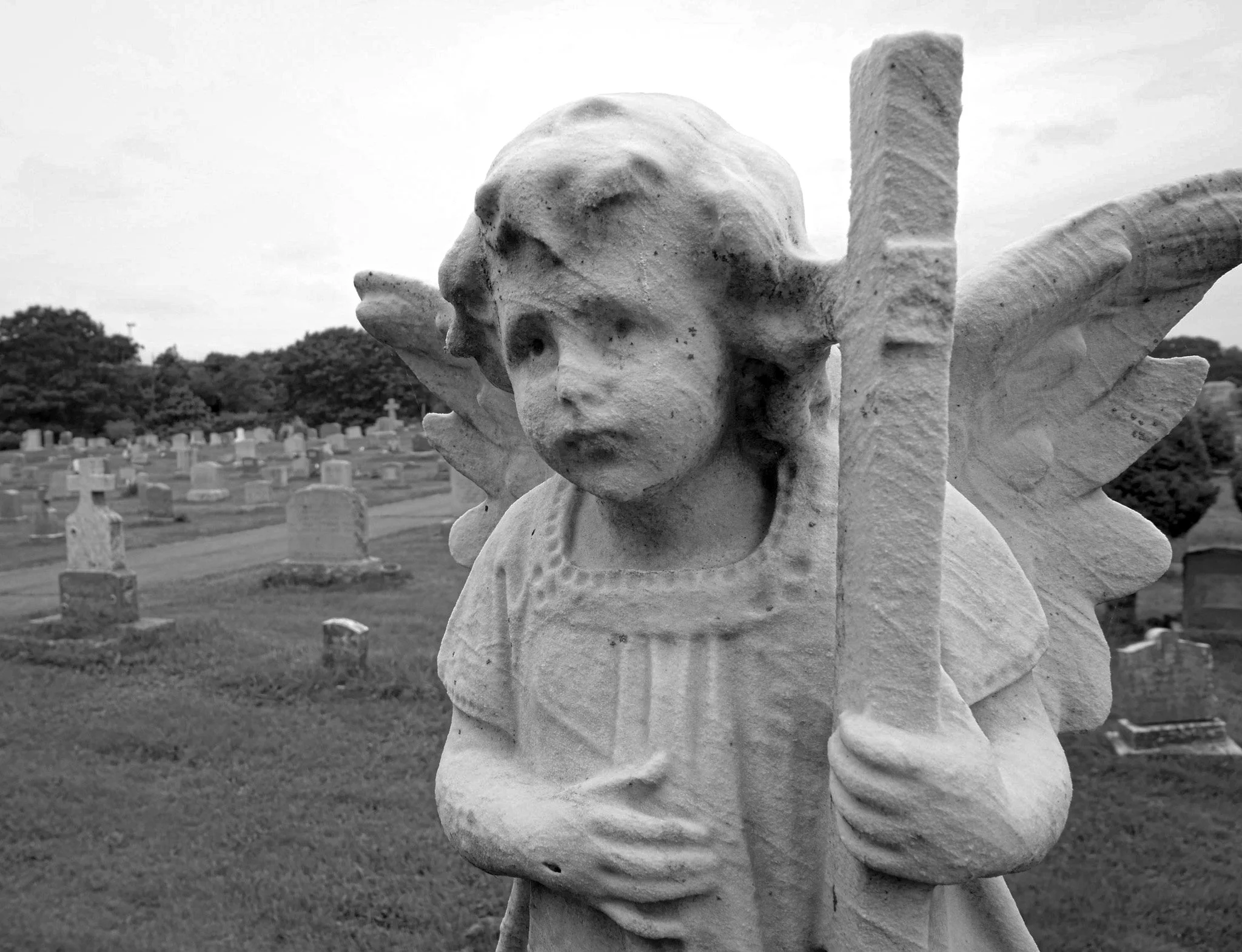
Back in September of 2023, my partner Heidi and I traveled to Gloucester, Massachusetts for a wedding. Gloucester is a historic Cape Ann fishing town where rugged coastline, working harbor life, and a deep maritime heritage meet—everything shaped by the steady rhythms of the sea. While we were there, I slipped away for a while with my camera, drawn as I often am to old cemeteries. Oak Grove Cemetery is one of those places—a quiet, historic resting ground overlooking the harbor, where generations of Gloucester’s seafaring families are remembered among weathered stones and salt-laced winds.
Among the headstones stands a weeping angel holding a crucifix. It is unusually large, visible even from a distance, and unmistakably sorrowful. The child-angel appears on the verge of tears—her grief so palpable that I felt pulled toward her before I fully understood why.
In the way we often think about adulthood, there isn’t much space for visible sorrow. We learn, subtly and steadily, to set it aside—to replace tenderness with composure, feeling with a kind of practiced distance. The world’s suffering is constant, we remind ourselves, and to weep openly can seem out of place, even unsettling.
But the angel offers another way. She does not look away or grow accustomed to what she sees. She remains tender, undone by it all, grieving without hesitation or restraint. It is as if she mourns not only one life, but the whole fragile condition of being human. Standing watch through the years, she still cannot make peace with what unfolds before her. One hand rests against her chest, as though startled by sorrow, quietly calling others to stop and feel it too.
And perhaps she sees more clearly than we do. In a world shaped again and again by conflict and suffering, lament may be the more honest response. Beneath our efforts to harden ourselves, something softer persists—a deeper instinct that resists indifference and refuses to let go of care.
This small angel offers a quiet, insistent lesson: it is not our hardness that saves us, but our capacity to weep—because in allowing ourselves to feel the sorrow of the world, we keep alive the tender, human part of us that still cares, still responds, and still hopes for something more.

Playfulness in a Heavy World
We trade play for productivity, curiosity for concern, creativity for obligation. We begin to measure our lives by output rather than aliveness. And yet, the memory remains—those long afternoons of childhood when time opened, imagination took over, and joy required no justification.
Meditating with art offers a gentle alternative to the constant pull of 24/7 news and the heaviness it carries. Instead of being swept up in urgency or fear, we’re invited to slow down and rest our attention on something quiet and present. Simply looking—without needing to interpret or react—allows the nervous system to settle. In a world that can feel overwhelming, art becomes a place of refuge, reminding us that attention itself can be an act of balance, clarity, and quiet hope.
Lately, I’ve been spending time with the painting The Ball (1899) by Félix Vallotton, now held in the Musée d'Orsay. If you have a moment, you might pause here and look it up for yourself before reading on. A small child in a bright white dress moves across a sunlit lawn, following a vivid red ball, while two adults remain at the edges—present, but removed. There’s a quiet tension in the scene, as if the child stands between two realms: one of light, play, and immediacy, and another more distant, shadowed, and difficult to articulate.
I find myself wondering about the red ball. What is it, really? Perhaps it’s whatever keeps us alive to ourselves—what draws us into presence, curiosity, and play.
Somewhere along the way, many of us lose touch with that. We trade play for productivity, curiosity for concern, creativity for obligation. We begin to measure our lives by output rather than aliveness. And yet, the memory remains—those long afternoons of childhood when time opened, imagination took over, and joy required no justification.
The original image I chose for this blog is a photograph I made at our local library, just before an exercise class began. It, too, carries the same invitation. My red ball is photography. My partner Heidi’s red ball is writing. Your red ball might be taking a painting class, gardening, or cooking. For Félix Vallotton, it was oil paint and canvas.
Find your red ball and return to it often. It may be one of the surest ways to navigate whatever difficult days lie ahead.
Learning to See in the Dark
We are living through a kind of shared darkness—the violence and suffering unfolding in the Middle East, and an economy that continues to weigh heavily on the middle class and the working poor. It’s easy to feel overwhelmed, to shut down, to look away.
One of my favorite painters is Ad Reinhardt. In the final decade of his life, Reinhardt devoted himself to what he called his “black paintings.” At first glance, they appear entirely black. They now hang in places like the Museum of Modern Art and the Tate Modern, quietly waiting for those willing to linger. But he was never really painting “just black.”
If you stay with one of these paintings—long enough for your eyes to adjust and your mind to settle—something begins to emerge. Faint squares within squares. Subtle shifts of color: black touched with red, or blue, or green. Nothing reveals itself quickly. It takes patience.
I’ve come to recognize something similar in my own life, especially in periods of depression. At first, everything feels flat. Heavy. Undifferentiated. My instinct is to turn away—to distract, to fix, to escape. But Reinhardt’s work gently asks something else of me: to stay. To look again.
And this feels especially true right now. We are living through a kind of shared darkness—the violence and suffering unfolding in the Middle East, and an economy that continues to weigh heavily on the middle class and the working poor. It’s easy to feel overwhelmed, to shut down, to look away.
But what if, even here, we are invited to a different kind of seeing? Not passive acceptance, and not indifference, but a steady, courageous presence—the kind that allows us to remain human in the face of what is painful and complex, the kind that keeps the heart from hardening.
When I stay—whether with a painting, my own inner life, or the state of the world—I begin, however faintly, to notice texture. Nuance. The possibility that even within darkness, something else is present.
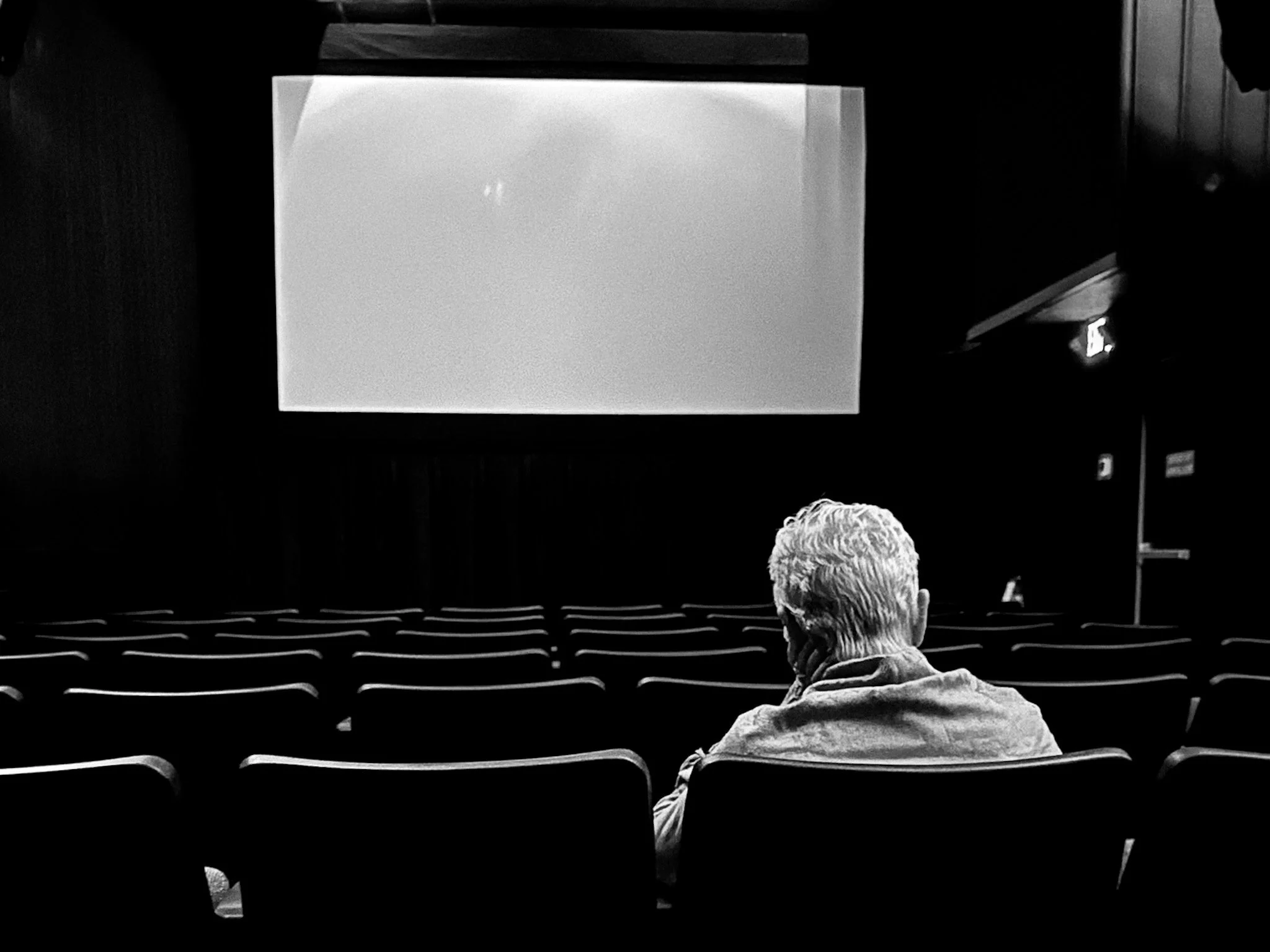
I’m reminded of a photograph I chose to accompany this piece. Every time I go to visit my son, Jon, in Brooklyn, we inevitably find ourselves in a small movie house somewhere in lower Manhattan, watching a film he has recommended. On one occasion, the theater was nearly empty—just the two of us and one older gentleman seated a few rows ahead. As the room dimmed into darkness, I found myself wondering about him. What had brought him there? What was unfolding within him as he sat alone before the screen? What colors—hidden in the darkness, in the interplay between darkness and shadow—were quietly revealing themselves in that moment?
I find myself hoping that one day Jon and I might stand together before one of Reinhardt’s black paintings. He is, in many ways, more courageous and fearless than I am, and I would love to see what he sees—what reveals itself to him—as he lingers there, unafraid, in the depth of Reinhardt’s darkness. Perhaps, standing beside him, I might learn to see a little more clearly myself.
Reinhardt’s black paintings do not offer easy answers. But they do offer this quiet encouragement: do not turn away too quickly. Stay. Look again. There is more here than you think—and that “more,” however subtle, however slow to appear, makes all the difference.
The Tenzo’s Instruction: A Zen Story
About fifteen years ago, I spent a week at Zen Mountain Monastery, a Zen Buddhist monastery tucked into the Catskill Mountains in Mount Tremper, New York. The monastery is part of the Mountains and Rivers Order in the Soto Zen tradition, where meditation, simplicity, and mindful work are understood as expressions of awakening. In this tradition, ordinary activities—walking, cleaning, cooking—are practiced with the same attention as seated meditation.
About fifteen years ago, I spent a week at Zen Mountain Monastery, a Zen Buddhist monastery tucked into the Catskill Mountains in Mount Tremper, New York. The monastery is part of the Mountains and Rivers Order in the Soto Zen tradition, where meditation, simplicity, and mindful work are understood as expressions of awakening. In this tradition, ordinary activities—walking, cleaning, cooking—are practiced with the same attention as seated meditation.
The week I attended was a sesshin, an intensive period of practice. Our days began before sunrise and unfolded in long stretches of meditation that carried us well into the evening. But meditation was only part of the practice. Each of us was also given daily work—simple chores done carefully and in silence.
One morning I was assigned to the monastery kitchen. My task was simple: slice a large bowl of onions. Like most Zen kitchens, the work was done quietly under the guidance of the Tenzo, the head cook of the monastery. In Zen tradition, the Tenzo’s role is not simply to prepare food but to care for the whole community through the mindful preparation of each meal. A brief written note showed how the onions should be cut. The rest we were meant to learn by watching and paying attention.
So I picked up a knife and began. I thought I was doing a fairly good job until the Tenzo walked over, gently placed her hand on my shoulder, and whispered softly, “No, no… never that way.” Then she took the knife and showed me. Her movements were slow and graceful. The blade moved easily through the onion, and she placed each slice into the bowl with quiet care.
Then she whispered in my ear: “Be present to the onion. Listen to it. The farmer listens. The Tenzo listens. The student listens. The onion already knows how it wants to be cut. Books cannot teach this. Listen. The onion will tell you everything.”
Then she moved quietly on. I returned to slicing. Around me, strangers and friends stood side by side, cutting onions, carrots, potatoes, and cabbage. Knives moving in steady rhythm. Hands working slowly and attentively. It was ordinary work. And yet it was beautiful. Simple. Almost perfect.
I have sliced many onions since that day. But every now and then, standing at my own kitchen counter with knife in hand, I remember the Tenzo’s quiet instruction. “Listen.”
Because when we listen deeply, patiently—to an onion, to another person, to the moment before us—something in the world changes. And often, something in us does too.
Originality: Returning to the Origin
When we try to be original, we often move away from direct experience. But when we simply attend—when we slow down enough to actually see—something authentic begins to appear. Not because we created it, but because we allowed it. Originality, in this sense, is not something we produce. It is what arises when we are fully present.
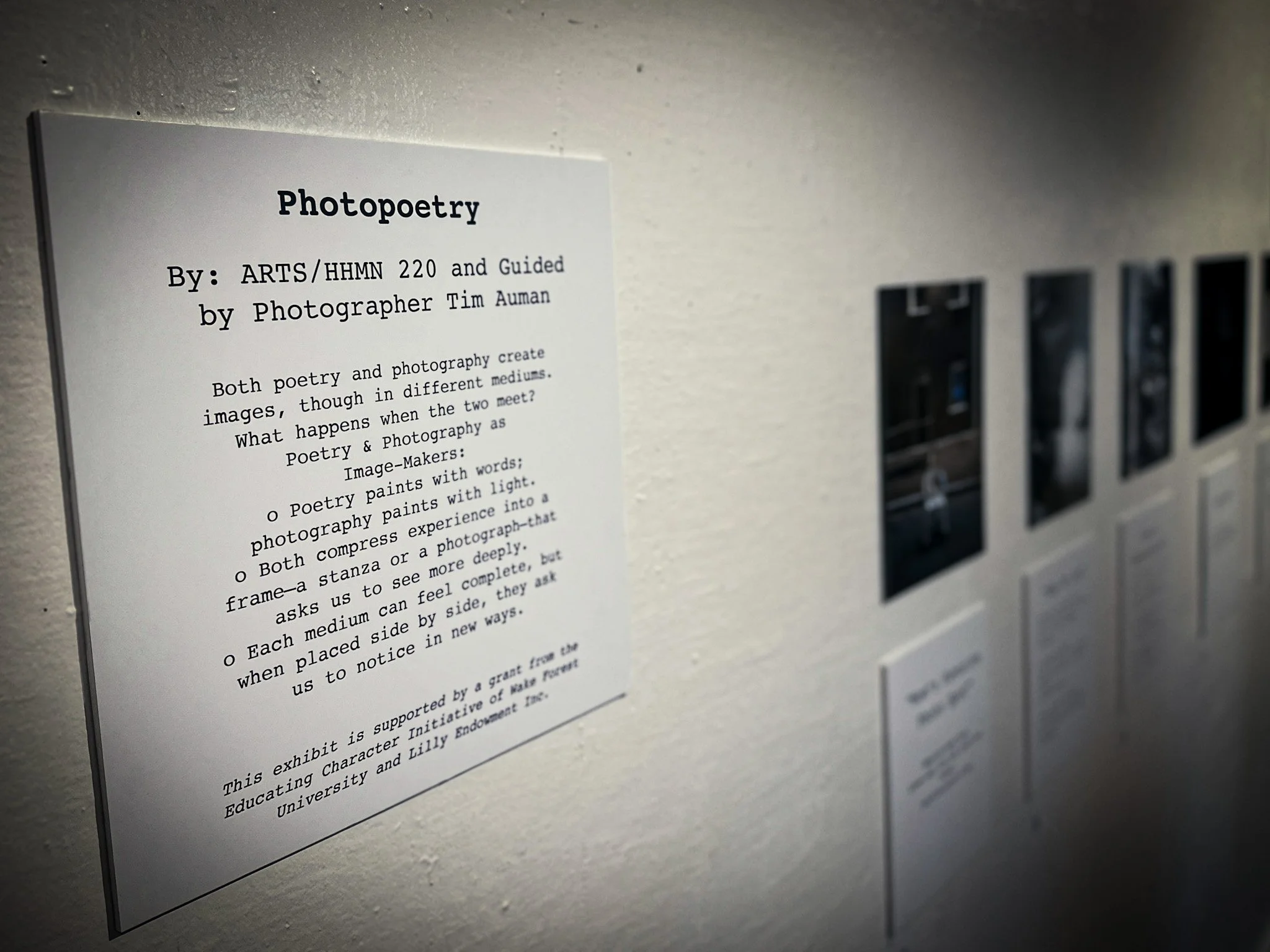
This spring, I had the privilege of teaching ARTS/HHMN 220: Photopoetry at Salem College. As part of the course, the students shared an exhibit of their work in the Elberson Fine Arts Center—original photographs paired with original poems.
The exhibit was supported by a grant from the Educating Character Initiative at Wake Forest University and Lilly Endowment Inc., for which I am deeply grateful.
But what stays with me is not simply the exhibit itself. It is the way the students began to see. Because early on, we asked a simple question: What does it mean to be original? In most settings, originality is about being new, different, or impressive. There is often a quiet pressure to stand out, to produce something that hasn’t been seen before. But in this class, we explored something different.
The word original comes from the Latin origo—meaning beginning or source. To be original is not to be novel. It is to return to the source of seeing itself. That sounds simple, but it is not easy. Most of us have learned, often without realizing it, to perform—to make images we think others will like, to write in ways that sound a certain way, to shape experience into something recognizable or impressive.
But contemplative photography invites us in another direction—not toward performance, but toward presence. The practice is to see what is here before we name it, before we interpret it, before we try to make it meaningful. Color, texture, light, shadow— a moment, as it is. And something begins to shift.
When we try to be original, we often move away from direct experience. But when we simply attend—when we slow down enough to actually see—something authentic begins to appear. Not because we created it, but because we allowed it. Originality, in this sense, is not something we produce. It is what arises when we are fully present.
Each student sees from a different place—shaped by their life, their attention, their way of meeting the world. No one else stands where they stand. No one else sees in quite the same way. And when perception becomes clear and unforced, that difference naturally reveals itself—not as something new, but as something true.
Walking through the exhibit, what I encountered was not a collection of images trying to impress. It was something quieter than that—moments of alignment, places where seeing and being met seemed to touch.
A different kind of originality—one that does not announce itself, but simply is. And perhaps this is the invitation, not only for photography, but for our lives.
Sacred Seeing: A Contemplative Photography Retreat
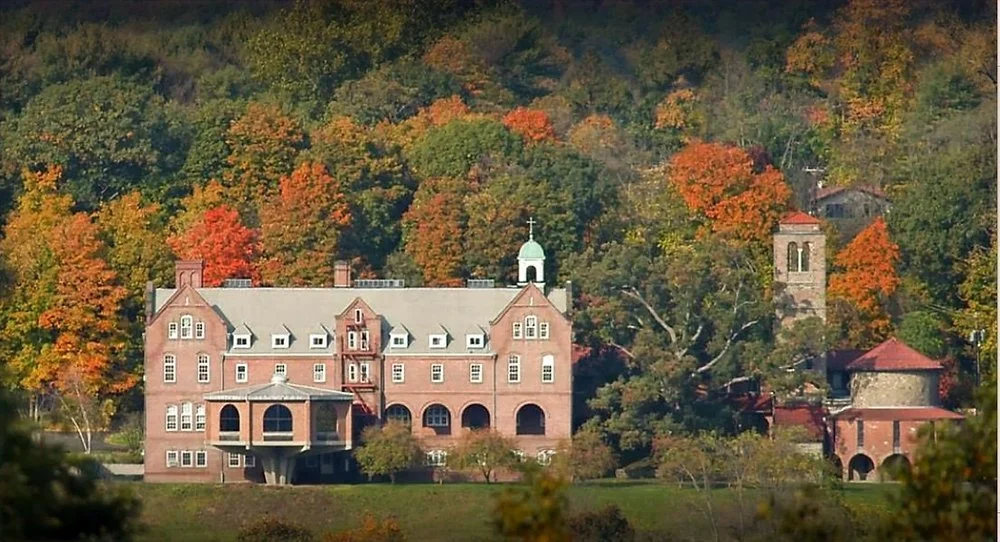
This four-day contemplative photography retreat is an immersion in sacred seeing. Drawing from the contemplative photography tradition of Miksang (“good eye”), the ancient Christian practice of Visio Divina, and the reflective discipline of photopoetry, we gather at Holy Cross Monastery on the banks of the Hudson River to practice seeing with clarity and devotion.
September 8–11, 2026
Holy Cross Monastery West Park, NY
What if nothing is missing — except our presence?
This four-day contemplative photography retreat is an immersion in sacred seeing. Drawing from the contemplative photography tradition of Miksang (“good eye”), the ancient Christian practice of Visio Divina, and the reflective discipline of photopoetry, we gather at Holy Cross Monastery on the banks of the Hudson River to practice seeing with clarity and devotion.
Within the monastery’s steady rhythm of silence and prayer, we slow down enough to notice what has always been here: color before concept, form before story, light before language. We begin to trust direct perception — the simple, vivid flash that arises before commentary.
Each day, participants will have the opportunity to create and submit images. Through gentle instruction and shared reflection, these practices refine not only how you experience the monastery grounds, but how you encounter the phenomenal world of your senses. The skills cultivated here extend beyond the retreat, quietly transforming how you move through daily life.
Visio Divina deepens this work. We sit with images — both our own and those of others — as one might sit with a sacred text: receptive, patient, attentive. Photopoetry completes the arc, pairing image and word in a dialogue that reveals layers of meaning neither could uncover alone.
No technical mastery is needed. A simple digital camera or smartphone will suffice. What is required is patience, presence, and a willingness to see what is already here.
About the Retreat Leader
Tim Auman is a contemplative photography instructor, certified mindfulness educator, spiritual director, and Associate of the Order of the Holy Cross. Based in Winston-Salem, North Carolina, he served for twenty years as the chaplain of Wake Forest University.
He teaches contemplative photography at a school for visual art and at the college level, integrating Nalanda Miksang practice, mindfulness, and poetic reflection into his work. Through retreats, courses, and spiritual direction, Tim invites others to cultivate clarity, presence, and reverent attention.
For Tim, photography is not primarily about self-expression, but about relationship — a way of meeting reality with attentiveness and care, and discovering beauty in the ordinary, the mundane, and the everyday. He and his partner, Heidi, are the parents of four beautiful children.
A Softer Kind of Power
Each time I step back from CNN, MSNBC, and the restless chorus of news feeds, a quiet truth rises to the surface. What so often parades as power—conservative, moderate, progressive alike—carries the scent of exhaustion. The louder the claim, the more frantic the gesture, the more clearly its hollowness reveals itself. Noise masquerades as authority; force pretends to be strength.
Each time I step back from CNN, MSNBC, and the restless chorus of news feeds, a quiet truth rises to the surface. What so often parades as power—conservative, moderate, progressive alike—carries the scent of exhaustion. The louder the claim, the more frantic the gesture, the more clearly its hollowness reveals itself. Noise masquerades as authority; force pretends to be strength.
And yet, beneath the headlines, wisdom moves softly. It appears in the courage to listen without rehearsing a reply, in eyes that meet the world with kindness rather than suspicion, in a smile that does not seek advantage, in prophetic words spoken sparingly, seasoned with compassion, and offered without demand.
This is a different kind of power. It does not rush or shout. It is anchored in Spirit—ancient, spacious, and quietly unstoppable. Nothing finally resists it.
How freeing it is to discover we do not need to posture like politicians or perform like CEOs of towering companies. Spirit-driven power has nothing to defend and nothing to prove. It is not measured by success or failure; wisdom knows both are passing weather.
Do you know such people—the ones whose presence slows the room, whose silence teaches, whose attention feels like a gift? If they are absent from your life, seek them. They rarely announce themselves, but the world leans toward them.
And what of the wisdom resting within you? Buried perhaps beneath urgency and fear, but still alive, still breathing. It waits in the quiet, inviting you to listen for the sound of what is most genuine in you. When trusted, this Spirit-rooted knowing does not clamor for attention; it gives birth to quiet wonders, again and again.
I confess I am no longer confident that our politicians in Washington are capable of leading us out of the mess they have helped create. But this is not a counsel of despair. Even now, wise and courageous people—diverse in voice, grounded in Spirit—are finding their footing, claiming their authority, and carrying a message of equality and compassion into the streets. A softer kind of power is already on the move. The only remaining question is this: have you found your voice yet?
The Logic of Violence
In Minnesota this month, communities have been grieving the deaths of Renée Good, a 37-year-old mother of three, and Alex Pretti, a 37-year-old intensive care nurse—two lives lost in the long, trembling shadow cast by fear, force, and confusion. Their names are spoken in vigils and carried on signs, not as symbols, but as reminders: real people, real families, real absences that will not be filled.
I remember the first time I held a gun. I was at Boy Scout camp, a line of boys standing shoulder to shoulder, each of us handed a .22 rifle—cool metal pressed into uncertain hands, the strange gravity of power resting between our fingers. I’ve never owned a gun, yet I still remember how it felt: the illusion that strength can be found in something harder, heavier, sharper, and the subtle way danger dresses itself as certainty.
But that promise is hollow. What we hold too long begins to hold us. When we clutch weapons against our chests, the logic of violence settles into our bones and seeps into our souls, reshaping our hearts in the very image of what we fear. There may be moments—tragic, unavoidable moments—when violence must be met with force. And yet every victory born of force of arms leaves a wound that never fully closes, not in the world, and not in us.
Across this country, those wounds have been opened wide. In Minnesota this month, communities have been grieving the deaths of Renée Good, a 37-year-old mother of three, and Alex Pretti, a 37-year-old intensive care nurse—two lives lost in the long, trembling shadow cast by fear, force, and confusion. Their names are spoken in vigils and carried on signs, not as symbols, but as reminders: real people, real families, real absences that will not be filled.
Even those who arrive in our streets wearing uniforms—ICE, Border Patrol, any instrument of force—often carry out tactics that are cruel, dehumanizing, and terrifying. Families are shattered. Communities are traumatized. Fear is used as a tool of governance. And yet, even here, we are not dealing with monsters. We are dealing with human beings caught inside systems that reward obedience over conscience, efficiency over mercy, and power over truth—systems that slowly train ordinary people to participate in what, on their own, they might once have recognized as unthinkable.
I understand those whose suffering led them to take up arms. History is full of such stories. Sometimes I feel that old gravity myself—the desire for clean lines and final answers. But I no longer believe the world is healed that way. The work of saving what is still human in us will not be won by weapons. It will be won by patience, by stubborn tenderness, by a loyalty to a wisdom deeper than our parties, our ideologies, our arguments about who is right and who is wrong.
And yes—there are times when love demands everything. Martin Luther King Jr., John Lewis, Fannie Lou Hamer, and so many others understood this. They taught us that some truths can only be carried by bodies willing to be broken rather than by hands trained to break others—and that this, too, is a form of courage deeper than violence will ever know.
Anger at injustice and tyranny is natural. It should be felt. But it must never be the guiding force of our actions. It must be taught to kneel. It must be refined into compassionate, focused action. This is how we resist without becoming what we oppose. This is how we stand firm without forgetting who we are. And perhaps, just perhaps, this is how we might repair a fragile democracy without shattering it in the process.

How to Be an Elder in a Time Like This
Again and again, when a society grows too accustomed to its own compromises, the young become its conscience.
If you have been paying any attention to the protests in Minneapolis, you have probably noticed something easy to miss but hard to forget: so many of those in the streets are young adults. Yes, there are more older bodies than one might expect—people like me, grateful and a little stiff—but the great current of these peacemakers is roughly the age of my children. They arrive with cardboard signs and open faces, with a courage that has not yet learned the language of resignation. They see with eyes not yet fully trained to accept the world as it is. They cannot quite say, “We’ve always done it this way,” or “We tried that once and it didn’t work,” and because of that, they still know—deep in their bones—that history is unfinished and that the future is not yet sealed.
This has always been so. Again and again, when a society grows too accustomed to its own compromises, the young become its conscience. It was young people who sat at segregated lunch counters, who rode buses into danger, who marched in Birmingham, who filled the streets during the Vietnam War, who helped awaken the modern environmental movement, who refused silence during the AIDS crisis, who stood up after Parkland, and who continue to insist—again and again—that dignity, safety, and belonging are not privileges but birthrights. They rise because they have more to gain—their whole lives stretch out before them—and because they have less to lose, not yet fully invested in the careful furniture of existing power.
And this courage is not confined to our own borders. Even now, in Iran, young people—led in such a courageous and visible way by young women—walk into their own streets knowing the cost may be imprisonment or death, simply to claim the most elemental human freedoms: to live, to choose, to breathe without fear. Their bravery should slow us down. It should return us to reverence. It should remind us that history is not something that merely happens to us, but something that is being written, line by line, by ordinary bodies willing to stand where love and truth require.
So to my older friends, I want to say this as gently as I can: listen. Listen not to correct, not to manage, not to translate their hope into your own familiar categories, but to be changed. Their wisdom does not come wrapped in certainty, but in a deeper remembering—of what we once knew and what we have gradually learned to forget.
And to all the mansplainers out there: please, please resist the temptation to offer an unsolicited explanation about someone else’s future. Sometimes the most faithful thing an elder can do is to become quiet enough to recognize that a new and necessary wisdom is already learning how to speak.